ISSUE 219 February 2026
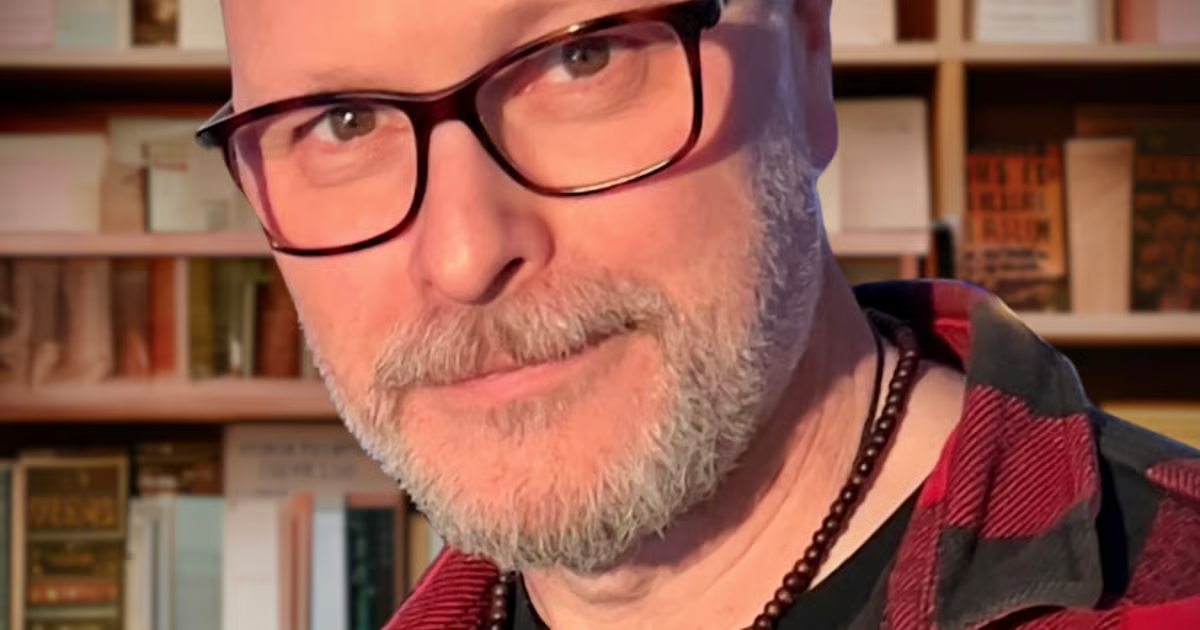
Written Word; Featured Writer Alan Raw
Alan is an author of speculative stories,
both fiction and non-fiction of future adaptation, eco-tech, and climate resilience, focusing on community resilience, sustainability, appropriate technology, Solarpunk futures and adaptation, with a bit of outer-space sometimes, or a ghost story just for fun.
Former multi-award-winning BBC Radio Journalist, Presenter, Producer & Engineer, for 21 years, co-founding BBC Introducing & BBC Eco-Time.
As a former broadcast journalist living near the beautiful Yorkshire Coast, he is very engaged in the local community.
When not writing, he’s a sustainability practitioner, permaculturist and social entrepreneur, facilitating creative community projects and supporting new artists and writers. He also co-owns a space company, using Earth observation to support forests.
Founder & Creative Director of Humber Eco Festival & Conference in 2023. 60,000 people engaged with 100 events across 3 local authorities.
A neurodiverse thinker and author, member of the Grokkist Network. Fascinated with nature, sustainability and the potential of satellites to support Earth. But mostly a creative dad from Yorkshire, who spends far too much on books and telescope.
And active as ever Alan has just finished a 12 country bookshop tour of Europe with Salt & Seeds and been elected as RSA Fellowship Councillor for the North. The RSA has partnered with Hull University to develop forest schools, through the RSA Playful Green Planet project. As a Doctor of the university, Alan has been working on the project as a storyteller creating a book with the children called Tell The Oak. It will be published by Grokkist Press soon.
Find Alan here; https://alanraw.co.uk/
Some fabulous festive evenings with Yorkshire writers ... at the fabulousTruman books in Farsley
Truman’s Book Club Social – Tues 27th January Cargo Wines Twistings Gallery, Sunny Bank Mill, 83-85 Town Street, Farsley, Leeds, United Kingdom
This isn’t just another festive night out – it’s the ultimate bookish Christmas party! Join us at The Old Woollen to celebrate the season with guest authors, goody bags, giveaways, games, dancing and a book-themed Secret Santa. It’s a night to celebrate the time we’ve spent reading, discussing books and building friendships since Book Club …
February 10, 2026 @ 18:30 - 21:00 An Evening of Yorkshire-based Historical Fiction with Liz Flanagan
Truman Books 95 Town Street, Farsley, Leeds
Come and join in at the bookshop and chat to award-winning author Liz Flanagan as she releases her brand-new debut, historical fiction When we were Divided. Taking a new direction writing historical fiction for adults, multi-award-winning children’s author Liz Flanagan presents a searing debut. Expertly crafted and beautifully sensitive, this book with its themes of family …
Get Tickets here


Reviewed by Andrew Sugden
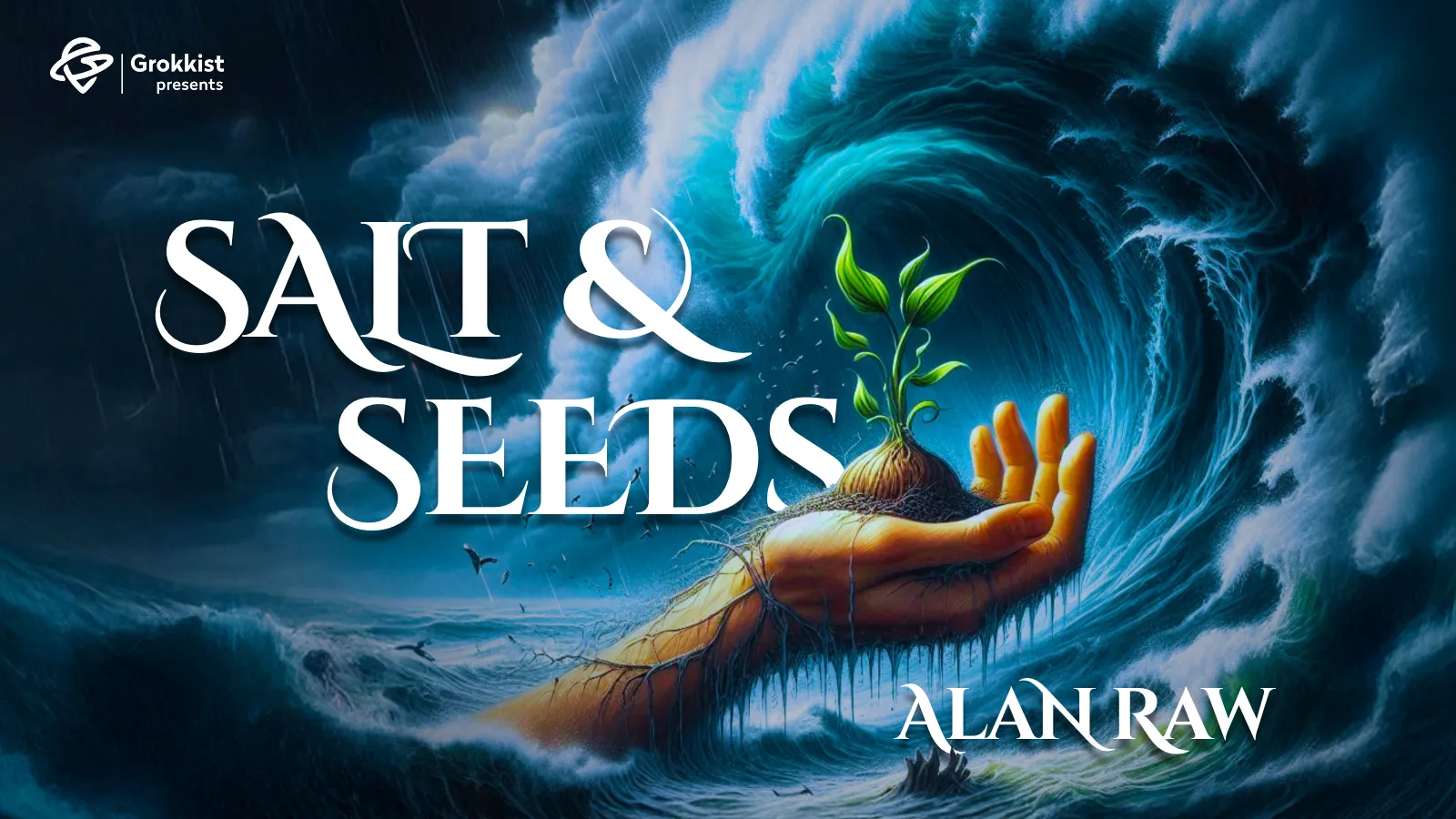
Salt & Seed, a gentle speculative fantasy adventure set in the near future, that explores the meaning of being human and the conflict between science-controlled corporate power set against communal sharing of knowledge and action.
England struggles with the climate changes, the coastline ravaged by high overflowing seas. Amidst this chaos, eastern seaside communities, working together, discover new evolving patterns, and work in partnership with nature, not against it.
New possibilities are growing. But will the cold corporate sciences thwart the communal effort? And who is this secret benefactor in the background, supporting the collectives against ‘The Corporates’? And why?
A hopeful story about adapting to climate change, focusing on community and the evolving partnership between all forms of life… human, animal, plant, micro and sentient AI … resilience rather than a dystopian future.
Meet Rowan Cullen, a climate scientist, a signal station observer, intrigued by new data, tucked away in his observatory in Whitby. Until that is, he meets Ash Van der Meer, a sassy Dutch scientist who whisks him away on a sea adventure journey to protect knowledge. A gentle romance bubbles through the story.
Then there is Mae, down-to-earth cultivator, growing crops on the hillside beside the sea, where crops shouldn’t grow. Mae introduces them to Cassiopeia, known as Cas, a teenager with brown eyes and curly hair. But interestingly described as ‘they’ or ‘their’ or ‘them’ throughout (except for one moment when they are she) and never fully described. Your picture of’ them’ is created through their actions. There’s something ethereal about Cas.
Also we meet a Gen-2 synthetic citizen, an advanced AI humanoid, a new citizen, evolving and searching for belonging.
And these are just a few of the cast of characters that you will meet as you are absorbed into this story.
I found myself immersed in this warm exploration of hope, accessibility and adaptation. Intrigued at how the adventure would turn out. I also found myself drawn to the conversation created in the story, about humanity, developing AI sentience and the evolution of partnership between all living entities.
This climate fiction story is charming, pleasant, and cosy, and the futuristic technology thoroughly impressive!
Alan writes in an unusual omniscient style, exploring the thoughts and feelings of all his characters. This takes a little getting used to. But this is a wonderful book! And my introduction to the solar punk genre. I recommend this book, it makes you realise change is possible as individuals and as communities, and you finish reading with a sense of hope.
Suitable for adults and teenagers.
Tell us your news...and we'll tell everyone else...
Click Here
Tel: 07885 377797

A quick look at Genre
What is Solarpunk?
Solarpunk is a science fiction genre and cultural movement that is optimistic and focused on building a sustainable, fair future through the combination of nature and technology.
It contrasts with dystopian genres like cyberpunk by envisioning a world where renewable energy, environmentalism, and social justice are central to society’s development, rather than focusing on potential technological misery. The genre emphasizes grassroots solutions, community, craftsmanship, and diverse aesthetics.
Unlike many science fiction genres that focus on a bleak future, solarpunk is fundamentally hopeful and solution-oriented, showing what it looks like to thrive without fossil fuels. It imagines a world where technology, particularly renewable energy, works in harmony with the environment, not against it.
Key themes include renewable energy, permaculture, and ecological restoration as the foundation of society.
Solarpunk focuses on social justice and community and is strongly tied to political philosophies like libertarian socialism and anarchism, promoting community, autonomy, and equitable systems.
It focuses on grassroots activism. It isn’t just a futuristic fantasy but also a real-world movement that encourages community-based actions like guerilla gardening and local energy projects to build a better future today.
Stories often include diverse aesthetics. The visual style often blends nature with technology, with a focus on beauty and practicality.
Solarpunk is often seen as a positive counterpoint to cyberpunk’s dystopian and corporate-dominated urban futures. While cyberpunk shows a future where technology has led to misery, solarpunk shows a world where technology is used to create a better society.
Like solarpunk, steampunk is inspired by the “punk” subgenres, but it focuses on a pre-industrial, steam-powered world. Solarpunk is a reaction to steampunk, looking forward with clean energy instead of backward to steam.